Tag: claims

  • Customer Letter: A Thank You From Mrs. Doyle of Number 9

    Customer Letter: A Thank You From Mrs. Doyle of Number 9

    Dear Purrfect Drop Insurance Assessors,

    I am writing to thank you for the way my claim was handled last month. As you know, my cat pushed a framed photograph from the mantel, and it landed on my foot, and I was upset.

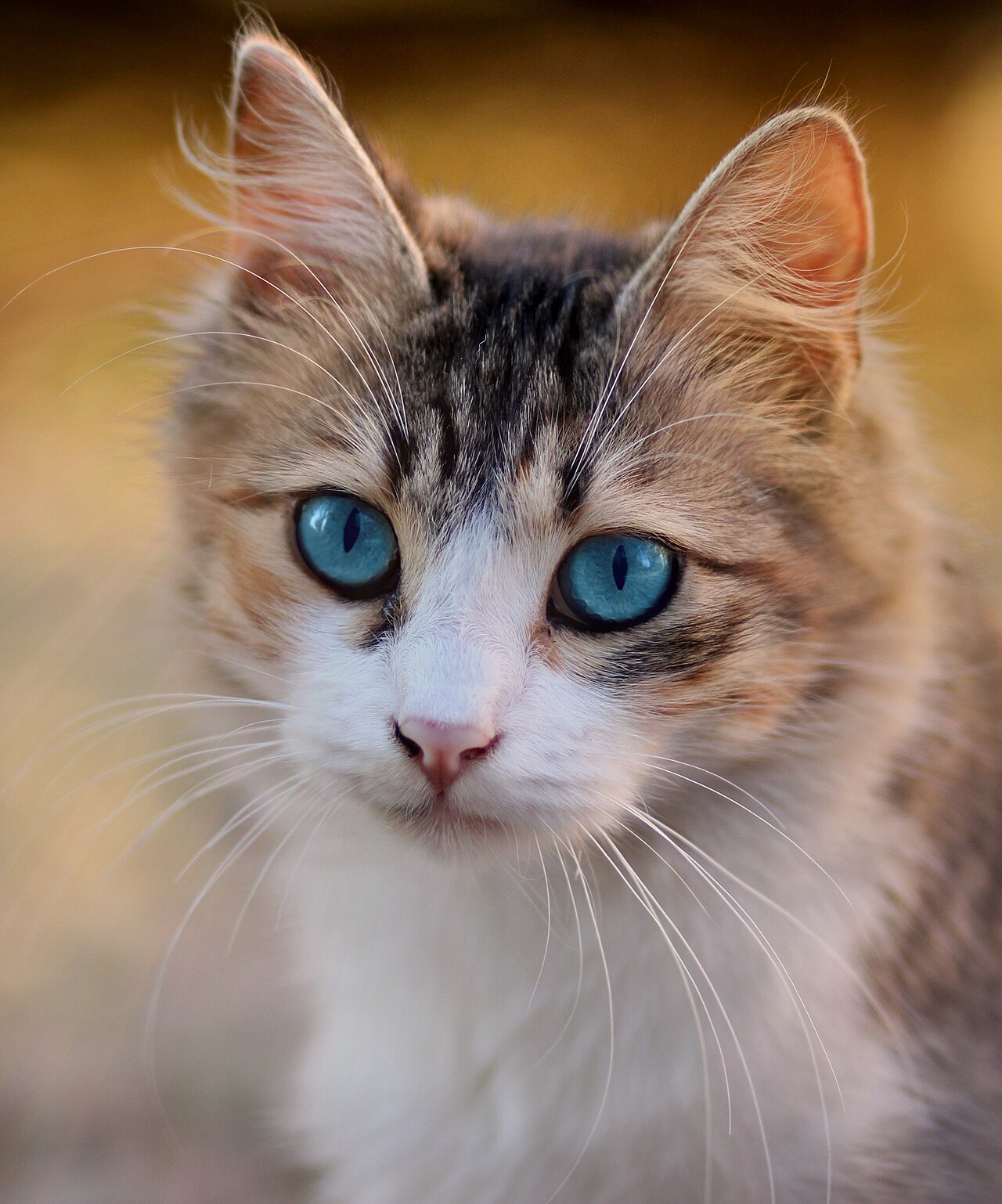
    Your adjuster, a small grey cat, arrived the next day. She did not say much. She walked slowly around the room, and then she sat by the fire and looked at me, and I felt understood.

    What impressed me

    • The adjuster did not blame me, though she did look at the shelf
    • She wrote her notes in a very neat paw print
    • She declined tea, but accepted a saucer of milk and a fish
    • My payout arrived in 29 days, and was approximately what I expected, minus a deduction I did not understand

    I would like to say that I will take better care of my shelves in the future. This is not true. I have already purchased another frame, and the cat has already looked at it.

    Yours,

    Mrs. Doyle, Number 9

    A reply from the company

    Thank you for your kind letter, Mrs. Doyle. We are pleased that the adjuster was able to make you feel understood. She has been told. She was already aware.

    Regarding the deduction you did not understand, this refers to the Frame Handling Fee, which applies to any framed item that lands on a foot. We regret that it was not explained at the time, since the adjuster was busy with the fish.

    We note that you have bought another frame and encourage you to place it on the floor, where it will be safe. We look forward to hearing from you again, in about six weeks.

    P.S. The adjuster would like it known that the fish was excellent, and that she has no further comment about the mantel.

    We also enclose a voucher for one free inspection of any shelf of your choice. It expires when the cat decides it does.

  • Meet the Adjusters: Toes McGraw

    Meet the Adjusters: Toes McGraw

    Toes McGraw is the senior adjuster at Purrfect Drop Insurance Assessors. She has handled more than 3,000 claims, sat in 800 sunbeams and been told to get off the table on no fewer than 12,000 occasions.

    How she started

    Toes joined the company as a trainee, with no experience and a small, rather nice hat. Her first claim involved a pair of reading glasses, which she approached with great seriousness. “I looked at them for two hours,” she says. “Then I looked at the cat. Then I wrote the word ‘obvious’ and went to lunch.”

    Her approach

    Toes believes in careful, quiet work. She arrives at a scene, scans the room, and sits in the middle of it. She does not ask questions in the first hour. She waits for the household to say too much, which they invariably do.

    Her tools

    • One clipboard, slightly chewed
    • One pen, never used
    • One small torch for looking under things
    • A handkerchief, for the householder

    Her philosophy

    “Every broken thing has a reason,” says Toes. “Usually it is me. But I am not allowed to say so, because of the policy.”

    She lives with two other cats and a plant she is not allowed to touch. In her spare time she enjoys looking at birds.

    On cats and paperwork

    Toes has strong views on forms. She believes that every form should be shorter than the incident it describes, and that no form should ask for the same information twice. “If I have to write my own name more than once,” she says, “I stop writing it.” Her reports are known in the office for being brief, accurate and slightly damp.

    A typical week

    Monday is for reviewing files and sitting on a pile. Tuesday is for home visits, which she dislikes but performs with grace. Wednesday is a day of quiet reflection beside a radiator. On Thursday she sits at the window and looks at the sky for answers. Friday is for tidying her desk, which she does by sweeping everything onto the floor, in the interest of efficiency.

  • Frequently Declined Claims: The Short List

    Frequently Declined Claims: The Short List

    Every year we handle thousands of claims, and every year we are asked why some of them are not paid. This list explains the ten most frequent reasons, in descending order, with a note on each from our adjusters.

    The list

    1. The object was on the edge. Any object on an edge is considered to have made a choice.

    2. The object was already cracked. An object that is cracked has had a life, and we respect that.

    3. The object was fragile. This sounds obvious, but it is surprising how often it comes up.

    4. The cat was not at home. We cannot assess a crime without a suspect.

    5. The cat was at home but asleep. See above.

    6. The cat was at home and awake but sitting very still. We find this the most suspicious of all.

    7. The claim form was filled out in pencil. Pencil is not a commitment.

    8. The claim form was filled out by the cat. This happens more often than you would think.

    9. The object was a candle. Candles are considered to be “already in motion”.

    10. The householder said the words “it just fell”. Nothing just falls.

    A note on the edge

    Our underwriters have spent many years studying the edge, and have concluded that it cannot be insured against, because it is the essence of the thing. If you wish to protect an object, move it away from the edge. If you wish to protect a cat, you cannot.

    Appeals

    A declined claim can be appealed within thirty days using Form 9C. The form requires you to state your case in three sentences, one photograph and a drawing of how you feel. All appeals are reviewed by a panel of three adjusters, who will each give their view in the form of a small yawn.

    How to avoid being on this list

    Move the object. That is all. Move it into a cupboard, a box or a different room, and the cat will find it anyway, but we will respect your effort. If you do not wish to move the object, you may wish to move yourself, ideally to somewhere with fewer shelves.

  • Case Study: The Claim of the Crystal Candy Dish

    Case Study: The Claim of the Crystal Candy Dish

    This account is shared with the consent of the policyholder, who asked that we not use her name, her address or her tone of voice. The claim is numbered 40211, and is known in the office simply as “the dish”.

    The report

    On a Thursday afternoon, a crystal candy dish sat on a sideboard in a home in a quiet street. The dish was a family heirloom, inherited from an aunt who had never liked it. It had been on the sideboard for nineteen years, and had acquired a certain dignity.

    At 4:10 PM, according to the policyholder, there was a “small noise”. At 4:11 PM, there was a “slightly larger noise”. At 4:12 PM there was no noise at all, which the policyholder described as “the worst one”.

    The investigation

    Our adjuster, a grey cat called Toes McGraw, arrived the next morning. She conducted a thorough walk through of the room, beginning with the sideboard and ending with a nap. Her notes include the following observations.

    • The sideboard was in good condition and level to within a whisker
    • The dish was no longer on it
    • Nine large fragments and an unknown number of small ones were found on the carpet
    • A single cat, name withheld, was found sitting in a patch of afternoon sun, looking fine

    The interview

    Toes interviewed the household cat for twenty minutes. The cat answered every question with a long blink. When asked whether it had been near the sideboard, it blinked. When asked whether it had touched the dish, it blinked again. When asked whether it felt remorse, it turned and walked away, which Toes recorded as “inconclusive but dignified”.

    The ruling

    After careful review the claim was approved at 60 percent. The reduction reflected the fact that candy dishes are, by nature, risk assets, and that the policyholder had placed the dish “within paw range”. She was also fined a small amount for the phrase “I always knew this would happen”, which our rules classify as hindsight.

    Aftermath

    The policyholder used her payout to purchase a replacement dish, which she placed on a high shelf. The cat observed this from the floor with great calm, and then got on the sideboard. Our office has not heard from the household since, which we take as a compliment.

    Lessons for the industry

    Claim 40211 has been used in training by our department ever since. It demonstrates three principles. First, an heirloom is only as safe as its shelf. Second, cats do not provide testimony, but they do provide atmosphere. Third, an adjuster who naps in the sun after an interview is not neglecting her duty, but reflecting on it.

    Correspondence

    Following the ruling, the policyholder wrote to the company. Her letter ran to four pages and contained the phrase “with respect” eleven times, none of which we believed. Our reply consisted of a single sentence: “Thank you for your letter; the cat has been informed.” She did not write again, and a card from the cat arrived at Christmas.

    Statistics

    Of the 212 claims involving crystal that we received that year, 209 were approved in part, two were declined and one was withdrawn when the dish was found, whole, behind the radiator. The householder was disappointed, and said so, and the cat was seen smiling.

    A note on the Thursday

    We often receive questions about why so many claims occur on a Thursday. The honest answer is that Thursday is a day on which nothing is expected, which is the cat’s favourite kind of day. The office is considering a policy of Thursday vigilance, which would involve staying awake.

  • How to Make a Claim: A Guide for the Bereaved Householder

    How to Make a Claim: A Guide for the Bereaved Householder

    At Purrfect Drop Insurance Assessors, we understand that discovering a broken object is an emotional experience. You are tired, you are confused, and you have just stepped on something. This guide takes you through the claims process in plain, calm language, and with only the occasional sigh.

    Step one: remain calm

    Do not shout. Shouting will not return the object to its shelf, and it will alarm the cat, which makes the assessment more difficult. Sit down, take a breath and note the time. If the cat is present, do not make eye contact. The cat knows what it did.

    Step two: gather the evidence

    Our adjusters will need the following items. Please place them in a clear bag and leave them on the hall table, where they will be at risk.

    • All fragments larger than a thumbnail
    • A photograph of the shelf, taken from a respectful distance
    • A short written statement, including the words “I heard a noise”
    • One witness, ideally not the cat

    Please do not attempt to glue the object back together. Glue is considered an act of denial and will reduce your payout by roughly the cost of the glue.

    Step three: submit Form 1A

    Form 1A is available at our office, on our website and also beneath whatever you have just put down. It asks six questions. Where was the object? Where is it now? Who was home? What were they doing? What was the cat doing? And finally, how does it make you feel? The final question is not scored. It is simply pleasant to be asked.

    Step four: await the visit

    A Purrfect Drop adjuster will arrive within five to ten working days, or at 3 AM, whichever is sooner. They will wear a small hat, carry a clipboard and inspect your shelf at length. They may sit on your sofa and look at you without comment. This is standard procedure and should not be interpreted as judgment, though it is.

    During the inspection, please refrain from offering tea. Our adjusters are not permitted to accept hospitality, other than a saucer of cream, a warm cushion and any sardines you may have.

    Step five: receive your decision

    Within thirty days you will receive a letter outlining our findings. The letter will be written in a formal tone and sealed with a paw print. It will say one of three things:

    • Your claim is approved in full. This is rare, and usually follows a very sad photograph.
    • Your claim is approved in part. This is the most common outcome, and we recommend preparing a small speech.
    • Your claim is declined on the grounds that the object “was at the edge”. See our Frequently Declined Claims page.

    What counts as a covered event

    Covered events include objects pushed, knocked, nudged, rolled or considered at length. They do not include objects dropped by humans, thrown by humans or subject to what we politely call “Tuesday”. If you are uncertain whether your event is covered, please call our helpline, which is answered by a cat who is asleep.

    A word from our Chief Assessor

    “Every claim is a story,” says Lord Fluffington Claims, our Chief Assessor, “and every story ends with a shard. We read each one with care and then we file it under F.”

    We are here for you, in a slow, attentive and mostly horizontal way. Thank you for choosing Purrfect Drop Insurance Assessors, and please mind the pieces.

    Frequently asked questions

    Can I claim for emotional distress? Yes, provided the distress is accompanied by a receipt. We regret that we cannot insure feelings that arrived without one.

    How long should I keep the fragments? We ask that fragments be kept for a minimum of ninety days, in a drawer, away from the cat. After ninety days, you may dispose of them, though many households find that they cannot.

    What if the cat is also the policyholder? In this case the claim will be treated as a family matter, and the adjuster will quietly leave the room.

    Tips for avoiding future claims

    • Place valuable objects behind a closed door, and tell the cat the door is a wall
    • Keep a decoy object, such as a bottle cap, near every edge
    • Offer a bowl of treats on the opposite side of the room whenever you leave
    • Accept that none of the above will work